Masterminds on the Move, DMSC Takeaways: How Dealers Scale AI Without Losing the Customer
AI can either drive more sales or drown your dealership in noise. At this year’s Digital Marketing Strategies Retail Conference, marketers, technologists, and automotive leaders came together to answer one main question:
How do you scale AI and digital marketing without losing the customer experience?
The answer was not more software… it was better strategy, cleaner data, and tighter execution.
A Framework Dealers Can Put to Work

Brian Pasch’s 3 Cs of Automotive AI gave the room a practical way to manage trust at scale.
Consent: Trust Comes First
Customers expect transparency. Period. If a shopper does not understand who is contacting them or why, the message fails before it lands. Research from McKinsey & Company consistently shows that trust drives long‑term revenue more than personalization alone.
AI only works when the customer believes you earned the right to engage.
Context: The Full Story Sells Cars
AI needs the full picture: sales history, service behavior, timing, intent. This is where automotive software integrations earn their keep.
Cadence: Right Message. Right Time.
Even great offers fail when timing is wrong. Cadence turns relevance into results.
AI Overload Is Real & Costs Deals
Here is the cringey truth: When five AI agents message the same shopper, personalization disappears. At that point, it’s all just noise.
Dealers see it. Consumers feel it. FTC pricing transparency came up time and again at DMSC.
Here’s the bottom line for dealers:
- Dealers who disclose fees upfront win trust faster.
- Marketplaces that reduce confusion earn loyalty.
CRM Alone Is Not Enough. Intelligence Wins Deals.
Dealers now demand a lot from their CRM:
- A complete view of the customer
- Real-time accuracy
- Actionable insight, not reports
Winning dealerships connect CRM automotive software with intelligence that prioritizes action, such as automotiveMastermind’s partnership with DriveCentric. This integration brings buyer insight and action into one real‑time view. Dealers see what just happened and what’s most likely to happen next, setting a new standard for modern auto sales software.
Data Decay Is the Silent Budget Killer
Unfortunately, bad data does not announce itself; it just quietly burns money. And the quality of third-party audiences and modeled data varies wildly.
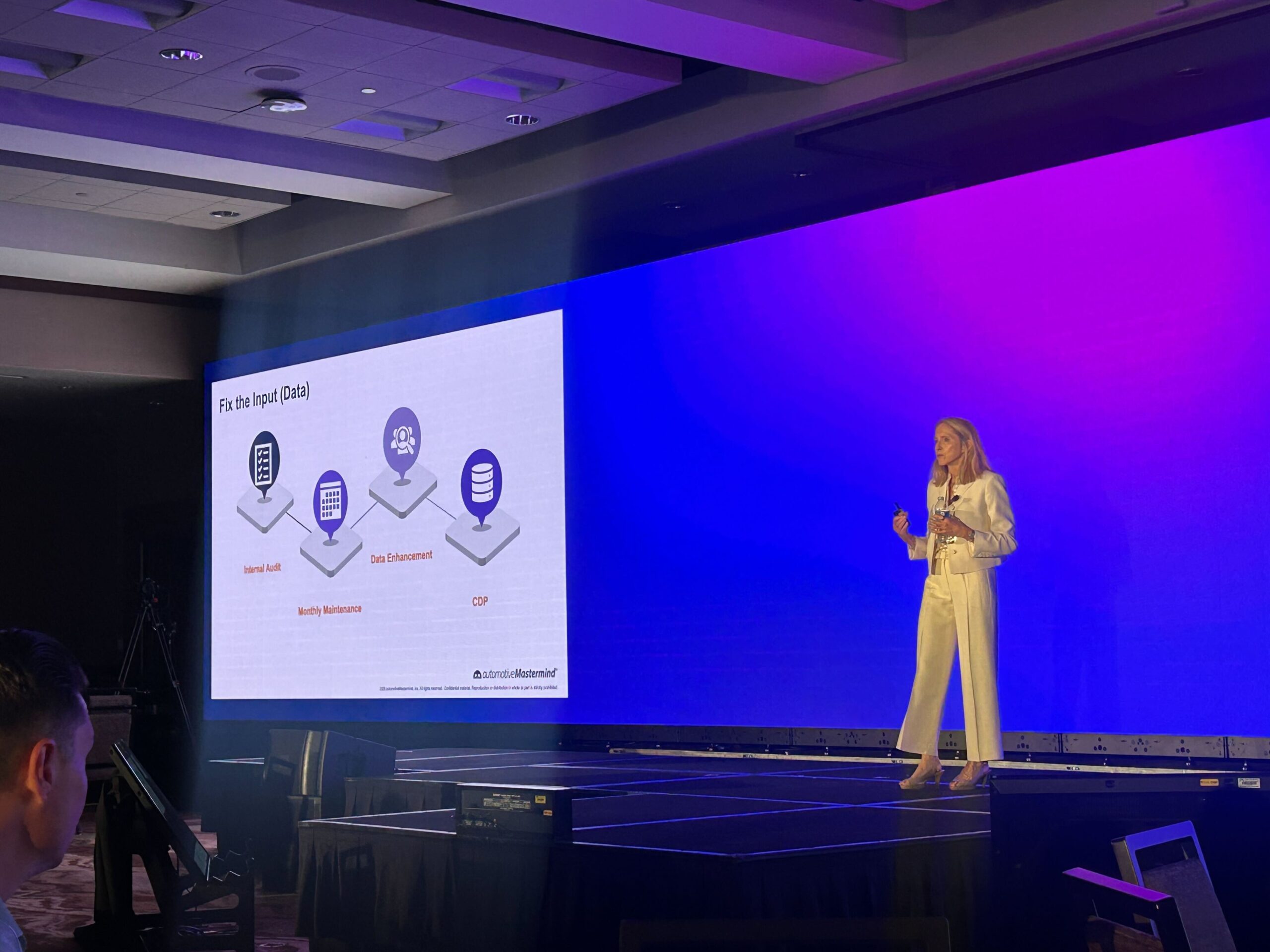
During her keynote at DMSC, Jennifer Sanford, VP of Marketing and Enablement at automotiveMastermind, shared a stat that stopped the room:
“The average dealer’s customer data decays by about 2% every month. That’s nearly 24% every year.”
That decay translates into thousands of dollars in wasted time and money by messaging the wrong consumer at the wrong time. The solution? Dealers must implement data cleansing and enrichment as a core step in their marketing processes, not an afterthought.
Jennifer also shared a real-world case study from Hudson Nissan of North Charleston:
After partnering with automotiveMastermind, the dealership achieved a 20% increase in revenue from the service drive.
What changed?
- Personalized service offers delivered at the right moment
- A stronger service‑to‑sales process
- Alignment across data, technology, and people
Final Takeaway: Control the Data, and the Tools Deliver
DMSC 2026 made one thing clear: without trust and clean data, AI and other digital tools stall.
Dealers who win will:
- Invest in automotive software that drives action
- Protect data quality like inventory
- Use AI to support people, not replace judgment
The future of automotive marketing combines smarter technology with smarter strategy.
FAQs
Why does data quality matter in automotive marketing?
Poor data leads to wasted spend and missed opportunities. Gartner’s Chief of Research predicts that by the end of 2026, “ethical design and clean data will become non-negotiable.”
How does AI help car dealers sell more cars?
AI in automotive sales prioritizes customers, predicts intent, and recommends the next best actions. When used properly, it increases efficiency and revenue.
What are predictive analytics in the automotive industry?
Predictive analytics use historical and real‑time data to forecast buying behavior. Dealers use it to target the right customer at the right moment.